The Reeves Plains Battery Project is located near Reeves Plains, which is a 50 minute drive north of Adelaide in South Australia.
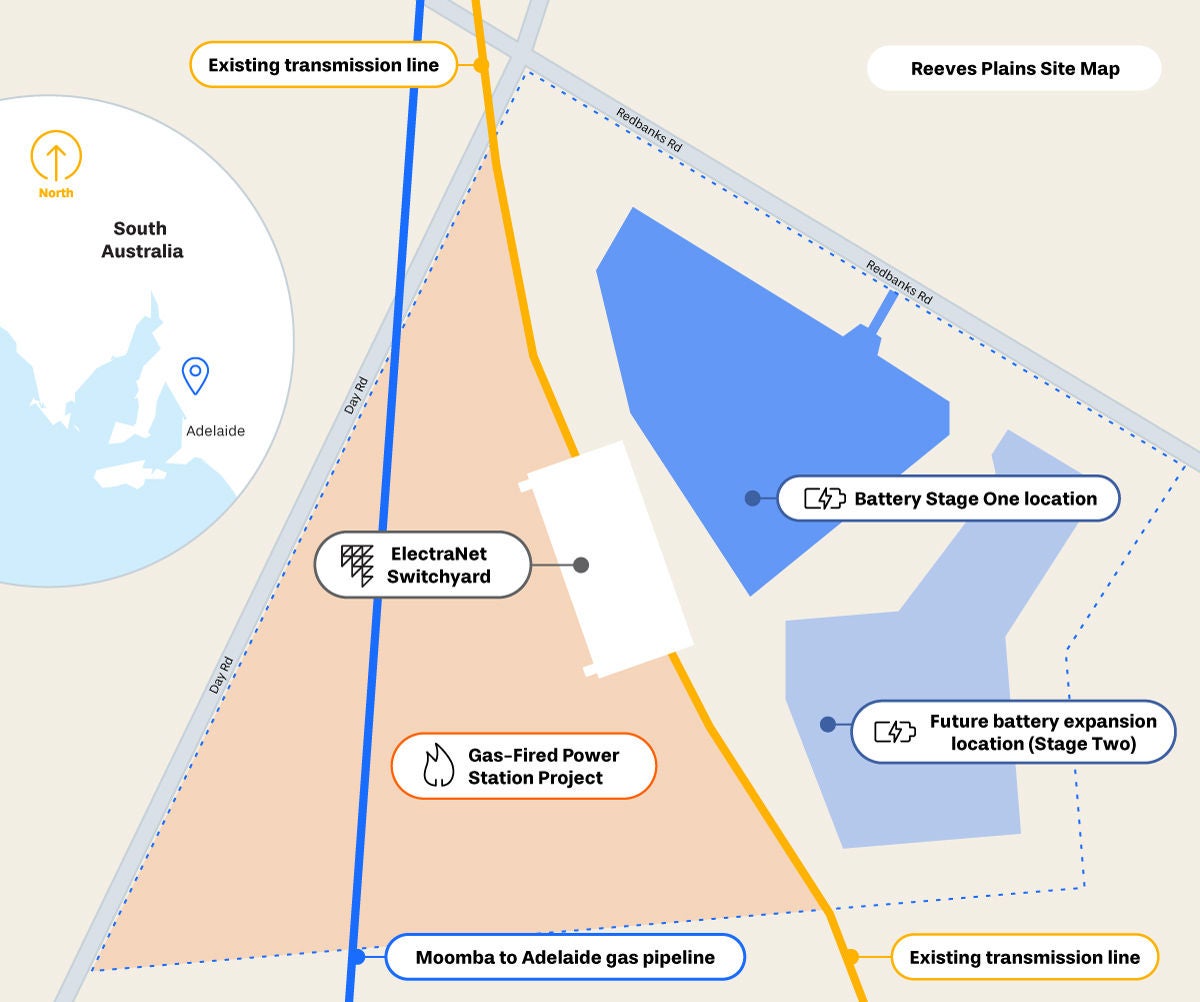
Reeves Plains Battery Stage 1 will be operational by 2028 with a 20-year lifespan.
Each stage of the battery project will include approximately 194 battery modules and 89 inverters, electrical connections, substation, water storage, office and control room, vegetated site screening, as well as fencing and lighting.
The batteries are kept in large shipping containers. The containers are designed to minimise visual impacts through using matte non-reflective finishes and being set back from roads. To minimise the impacts of lighting during the evenings, the site will only use movement and heat sensor lighting.
Once the battery project reaches end of life, it will be taken apart safely, and the parts will either be reused or recycled so the materials can be used again.
We are also developing the Reeves Plains Gas Power Station at the same site. You can find out more about this project at the Alinta Energy website.
Alinta Energy. You can read more about Alinta Energy on our website.
If you have questions about the construction works, contact the Genus site team: 0447 032 380 (8:00am – 5:30pm ACDT). After hours, you can leave a message.
If you have any other questions or concerns, you may contact the Alinta Energy Community Engagement Team on 0497 928 036 or reevesplains@alintaenergy.com.au.
We'll actively engage with you and your community to gather feedback and ensure your voice is heard. By collaborating closely with you and other community members, we aim to deliver tangible benefits that address the region's specific needs.
The battery will bring benefits to the region. It will help keep South Australia’s power supply reliable by storing renewable energy and providing backup generation when it’s needed most. During construction and operation, the hub will create local jobs and open opportunities for local businesses and contractors.
Yes. The Reeves Plains Battery Project will create local jobs during construction and operation, support local businesses through procurement opportunities, and deliver skills and training programs. It also includes a Benefit Sharing Program to invest in community initiatives, ensuring the project brings long-term economic and social value to the region.
Being a good neighbour is core to how we operate. Our Neighbour Program provides payments to eligible households closest to the battery project (Stage 1), based on proximity. Eligible dwellings must be within 1.5 km during construction and 1 km during operations, be habitable, occupied for at least six months in the year before operations start, and exist as of January 2026.
A battery project goes through a formal approval process. We study the site, assess environmental impacts like biodiversity and noise, and design the project to mitigate risks. Then we submit development applications under the relevant planning and environmental laws. Throughout the process, we consult with the community and regulators to make sure the project meets all standards.
Independent technical studies have been undertaken to understand any potential environmental and social impacts during construction. Studies have included:
The studies have informed us of the development of management plans that address any impact during construction and how we expect them to be managed.
We’re committed to reducing construction impacts on communities and the environment and keeping people safe whilst we work. Some of the ways we do this, while we work closely with our contractors, include:
The chance of a serious incident is extremely low. Even in the unlikely event of a fire, the site is designed to contain it and prevent it from spreading.
Due to the flat, open cropping landscape, the greater fire risk is more likely to come from offsite, such as a grassfire.
To reduce risk, the site includes a 50m buffer area around the facility – this helps to achieve a low bushfire attack level rating.
This buffer area will consist of two parts: an inner zone with no flammable material and an outer zone where flammable materials are kept to a minimum to reduce any potential risks. In addition, the battery site will have water tanks (with up to 300,000 litres in capacity) located near its entrance.
These have been located to allow for Country Fire Service access and use in the in the event of any nearby fires from the surrounding landscape.
Fire safety is a top priority, and the project will include a range of advanced systems and plans to keep people safe. While the chance of a fire starting from the battery is extremely low, we must be well prepared just in case. The battery energy storage system site has a multi-tiered system with cascading controls to minimise the risk of a fire.
Acknowledgement of Country
Reeves Plains Energy Hub acknowledges the Kaurna people of the land on which we propose this project. We acknowledge their continuing connections to Country and community. We pay our respect to their Elders past and present and extend that respect to all Aboriginal and Torres Strait Islander people.